
What is Force Deck Testing? Understanding the Basics

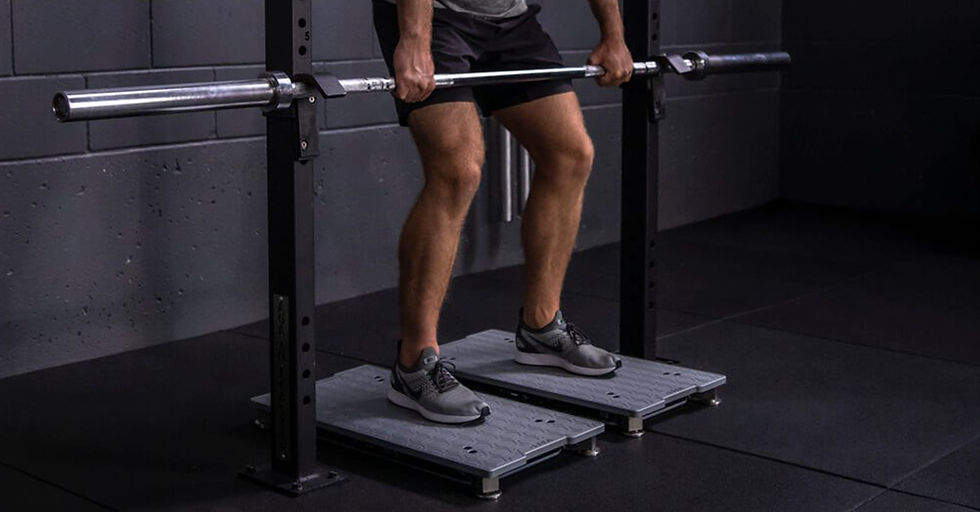
If you have ever asked the question, "What is force deck testing?" you are not alone. It's becoming increasingly common in everything from physiotherapy to sports performance enhancement, but it remains relatively niche.
ForceDeck testing uses specialist force plates to measure how much force a person produces, how quickly they produce it, how they distribute force between their limbs, and how those forces change during movement. Instead of relying solely on what can be seen during an assessment, force decks provide objective data that helps clinicians and performance professionals understand what is happening beneath the surface.
At Ultra Sports Clinic, ForceDeck testing forms part of a wider assessment to help identify physical deficits, monitor rehabilitation, and guide a more individualised approach to training and recovery. Whether recovering from an injury, returning to sport, trying to improve performance, or establishing a baseline, force deck testing provides useful information that complements a clinical assessment.
Read the full article
Understanding Force Deck Testing

What Are Force Decks?
Force decks are specialised force plates designed to measure the forces exerted by a person against the ground. The plates sit underneath the feet while an individual performs a particular movement or test. Sensors within the plates capture changes in force, allowing software to analyse the results and produce measurable information about strength, power, balance, movement, and symmetry.
VALD Performance's ForceDecks system is a dual force plate system used for a wide variety of assessments, including jumping, strength, balance, and functional movement tests. The system automatically detects and analyses more than 20 different movements. In simple terms, force decks turn movement into measurable data.
What is Force Deck Testing?
Force deck testing is the process of using these plates to objectively measure and analyse the forces produced during specific physical tasks. Depending on the assessment, force decks provide information about:
Force production: Strength, explosive power, and rate of force development.
Movement mechanics: Jump performance and landing mechanics.
Symmetry and stability: Left-to-right asymmetry, balance, centre of pressure, and movement strategies.
Progress: Changes in performance over time.
Research examining VALD ForceDecks against laboratory-grade force plates found less than a 1% difference across more than 200 metrics tested, with mean bias below 2.5 N for force and 0.1 mm for centre-of-pressure measurements.
How Does Force Deck Testing Work?
A typical ForceDeck assessment is straightforward. The individual stands or moves on the force plates while the system records their interaction with the ground. For example, during a countermovement jump, the system analyses how an athlete loads the plates before take-off, how force is produced during the jump, and how they absorb force when landing.
The process generally involves:
Initial assessment: Your clinician establishes why testing is appropriate and what they want to understand.
Test selection: A suitable force plate assessment is chosen based on your goals or injury history.
Baseline measurement: Your initial results provide a starting point.
Data analysis: Force, movement, and symmetry measures are reviewed.
Clinical interpretation: Results are considered alongside symptoms and your physical examination.
Individualised plan: Findings inform your rehabilitation or performance training.
Retesting: Testing is repeated to assess changes over time.
What Can Force Decks Measure?
Different tests answer different clinical questions. Not every person needs every test; assessments are selected based on your individual situation to provide relevant information rather than just generating data:
Assessment | What it can tell us | Potential application |
Countermovement jump | Force production, jump strategy and explosive performance | Rehabilitation and performance |
Squat jump | Explosive force production | Strength and power assessment |
Landing assessment | How force is absorbed | Return-to-sport rehabilitation |
Single-leg testing | Differences between limbs | Lower-limb rehabilitation |
Isometric strength testing | Ability to produce force without movement | Strength assessment |
Balance testing | Centre of pressure and postural control | Balance and rehabilitation |
Functional tests | Force production during practical movements | Rehabilitation progression |
Why Might You Need Force Deck Testing?
Force deck testing isn't just for professional athletes. You may benefit from testing if you:
Are recovering from a sports injury or surgery.
Have experienced a lower-limb injury (knee, ankle, hip).
Want objective measurements during rehabilitation.
Have noticed a difference between how your legs feel.
Are returning to running, jumping, or cutting activities.
Want additional information before returning to competitive sport.
Have reached a rehabilitation plateau.
Want to establish a physical baseline or improve sports performance.
Injury Rehabilitation & Asymmetry
Recovering from an injury isn't simply about waiting until the pain disappears. You may feel better while still having hidden deficits in strength, power, balance, or your ability to absorb force. These deficits aren't always obvious during everyday activities but become critical during high-demand sporting movements. Force deck testing provides objective data on how your body responds to these demands.
You can read more about this in our related guide: The advantages of using VALD Performance ForceDecks for injuries.
During testing, you may also hear the term asymmetry, which refers to a measurable difference between the performance of the left and right sides of your body. However, asymmetry does not automatically mean you have an injury; some differences are completely normal based on the individual and sporting demands. Clinicians analyse this measurement alongside your injury history, symptoms, strength, movement quality, and training history to understand if a finding is meaningful for you.
Return to Sport and Performance
Returning to sport requires rebuilding the physical qualities needed to cope with sprinting, jumping, landing, and changing direction. Force decks track changes in explosive power, single-leg performance, and landing forces to determine appropriate progression. Readiness should never be determined by a single test, but rather a broader assessment considering your injury, capacity, confidence, and sport requirements.
For athletes looking to optimise performance without an injury, objective testing identifies areas for development. The process becomes: Test → Understand → Train → Retest → Adapt.
The Assessment Process at Ultra Sports Clinic

Your assessment will depend on why you are being tested. You may be asked to perform a selection of movements, including standing balance, squatting, jumping, landing, or isometric strength exercises.
Force deck reports contain a considerable amount of data, but you don't need to interpret every graph yourself. Our clinicians will explain what the findings mean for your goals—such as whether overall force production has improved, if your landing strategy has altered, or if a specific physical quality requires further training. Testing is most valuable when it answers the question, "What should we do next?".
Can Force Deck Testing Diagnose an Injury?

No. Force deck testing measures physical characteristics and responses to specific movements, but it does not replace a medical history or clinical examination. A number on a force deck report only has meaning when it is interpreted in context alongside your symptoms, mobility, functional ability, and training history.
Force Deck Testing Checklist
If you are considering testing, keep these points in mind:
Before testing: Define what you want the assessment to tell you (e.g., preparing to return to sport, noticing limb differences, or setting performance goals).
During testing: Listen carefully to instructions, perform movements consistently, and tell your clinician if something causes pain. Focus on performing the movement correctly rather than chasing a particular number.
After testing: Ask what your key results mean, understand how findings relate to your goals, and identify the main areas you need to work on in your rehabilitation or training.
Frequently Asked Questions
Is force deck testing painful? Testing is non-invasive, though some assessments involve demanding activities like jumping. Tests are chosen appropriately based on your stage of rehabilitation.
How long does it take? The duration depends on the purpose of the assessment and the number of tests required.
Are force decks the same as weighing scales? No. While both use sensors, scales primarily measure body weight. Force decks measure how force changes dynamically during movement.
Can force decks tell me if I'm ready to return to sport? They provide valuable objective information, but readiness is based on a broader assessment of physical capacity, symptoms, confidence, and specific sporting requirements.
Are force decks only for elite athletes? Absolutely not. They are useful for amateur athletes, recreationally active people, and individuals in injury rehabilitation.
What should I wear? Comfortable sports clothing and suitable footwear.
Key Takeaways
Force deck testing measures the forces produced and absorbed by your body using specialised plates.
It provides objective data on strength, power, balance, force production, and left-to-right differences.
The testing supports injury rehabilitation, return-to-sport decisions, and performance development for people of all athletic levels.
An asymmetry does not automatically mean you have an injury, and force deck testing does not diagnose injuries on its own.
At Ultra Sports Clinic, force deck results are interpreted alongside your history, symptoms, physical assessment, and goals.
Book Force Deck Testing at Ultra Sports Clinic

Whether you are recovering from an injury, preparing to return to sport, or looking to understand your physical performance in greater detail, force deck testing can provide another valuable layer of objective information.
If you'd like to understand what force deck testing could tell you, contact Ultra Sports Clinic to discuss an assessment.


Comments